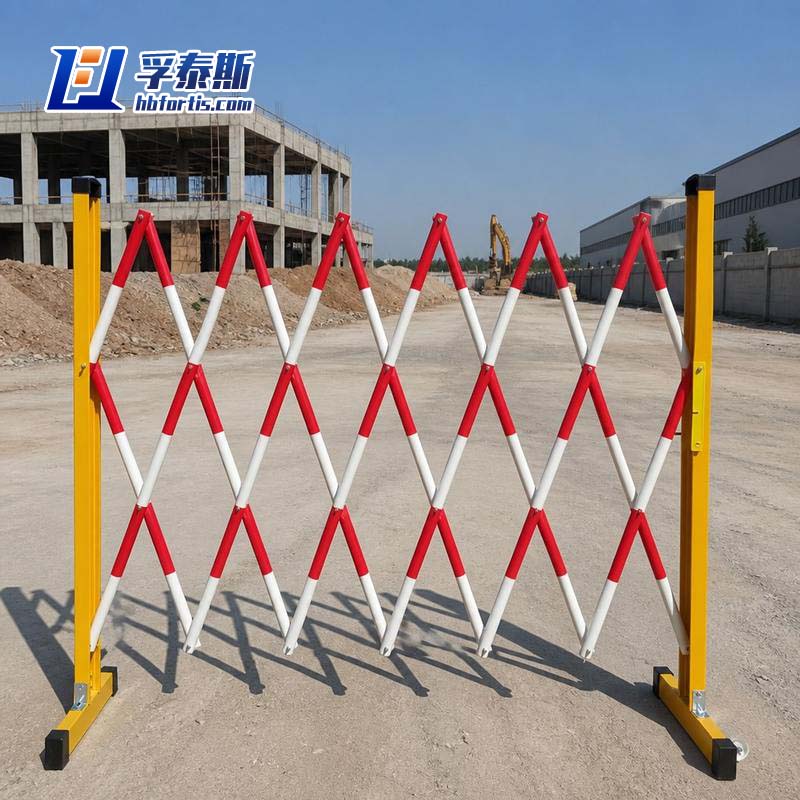
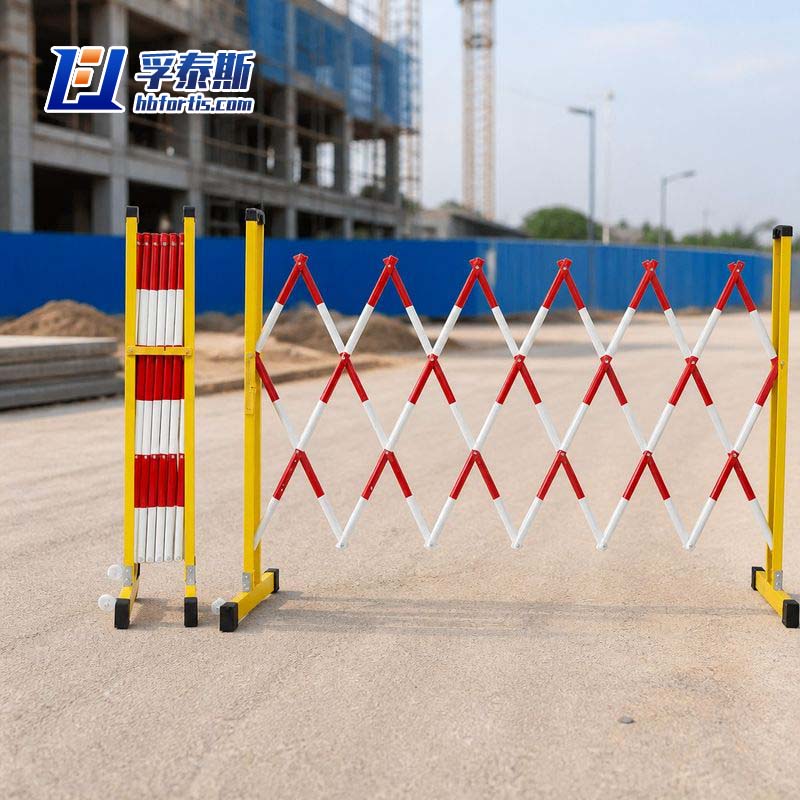
As a China-based factory-direct exporter and supplier, we manufacture FRP (fiberglass-reinforced plastic) fences engineered for coastal farms, chemical plants, solar installations, and industrial parks where rust and salt spray destroy metal alternatives. Our FRP fences are non-conductive, UV-stable, and maintenance-free, supplied in bulk with custom pultruded profiles and mesh options. Buyers sourcing from us eliminate middlemen, cut landed costs, and receive export-grade packaging with fast container loading. Partner directly with our production team for consistent quality and repeat-order pricing.When your project sits near saltwater, acid exposure, or high-voltage equipment, ordinary fencing fails fast—so we build FRP fence panels and posts that ignore corrosion, resist UV degradation, and require no repainting or grounding. From our own Chinese production lines, we ship directly to importers, contractors, and industrial buyers, offering tailored dimensions, resin formulations, and color matching without trader markups. Whether you need hundreds of meters for a coastal livestock operation or modular runs for a chemical storage yard, our export team handles documentation, mixed-load consolidation, and container optimization. Request a specification sheet and see why overseas buyers keep returning to a true factory supplier rather than a trading company.

كتيب منتجات شركة هيبي فورتيس للتكنولوجيا المحدودة
Product Advantages
Corrosion Immunity Extends Service Life Far Beyond Metal Fences
FRP fence does not rust, rot, or corrode when exposed to salt spray, acid rain, fertilizers, or industrial chemicals. Unlike galvanized steel or aluminum, it will not develop red rust stains or pitting after years of coastal or chemical-plant exposure. This means a single installation can outlast multiple replacement cycles of metal fencing, dramatically lowering total ownership cost.
Non-Conductive and Electrically Insulating for Hazardous Sites
Because fiberglass-reinforced plastic contains no metal, FRP fence is inherently non-conductive. This makes it the preferred choice around electrical substations, solar farms, battery storage yards, and railway corridors where grounding metal fences would be costly or dangerous. Workers and maintenance crews face no risk of electrical shock from contact with the fence structure.
High Strength-to-Weight Ratio Simplifies Transport and Installation
FRP fence profiles weigh roughly one-quarter of comparable steel sections yet deliver impressive tensile and impact strength. This low weight reduces freight costs, allows manual handling without heavy cranes, and speeds up on-site assembly. Contractors can install longer runs per day with smaller crews, cutting labor expenses on large perimeter projects.
UV Stabilization and Colorfast Performance for Outdoor Exposure
Our FRP fence is manufactured with UV inhibitors and surface veils that resist yellowing, chalking, and fiber bloom. Colors remain stable under intense sunlight, making the fence suitable for desert, tropical, and high-altitude installations. No painting, staining, or protective coating is needed at any point in its service life.
Application Scenarios
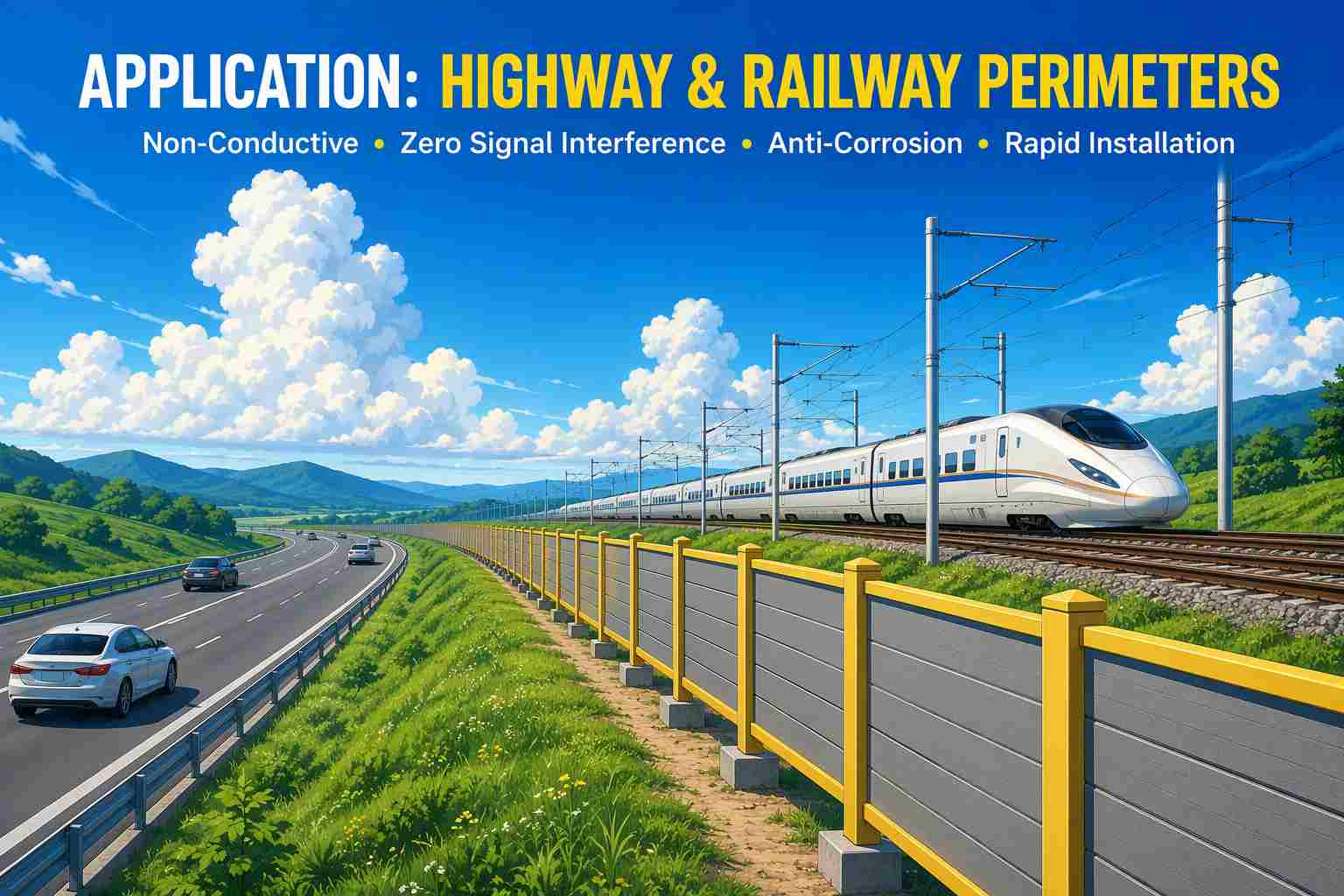
FRP fence is used along highway and railway perimeters as a durable, low-maintenance barrier that can be installed in long continuous runs. The panels are lightweight, non-conductive, and resistant to vehicle exhaust, road salt, and vibration, and they can be assembled with standard hand tools without welding or hot work. It solves the problem of steel fencing corroding from de-icing salts and requiring lane closures for repainting or replacement, and it avoids the signal interference that metal fencing can cause near railway traction power and signaling systems. The real value for transport authorities is faster installation during short possession windows, fewer maintenance callouts, and a perimeter that maintains structural integrity in high-wind and freeze-thaw conditions.
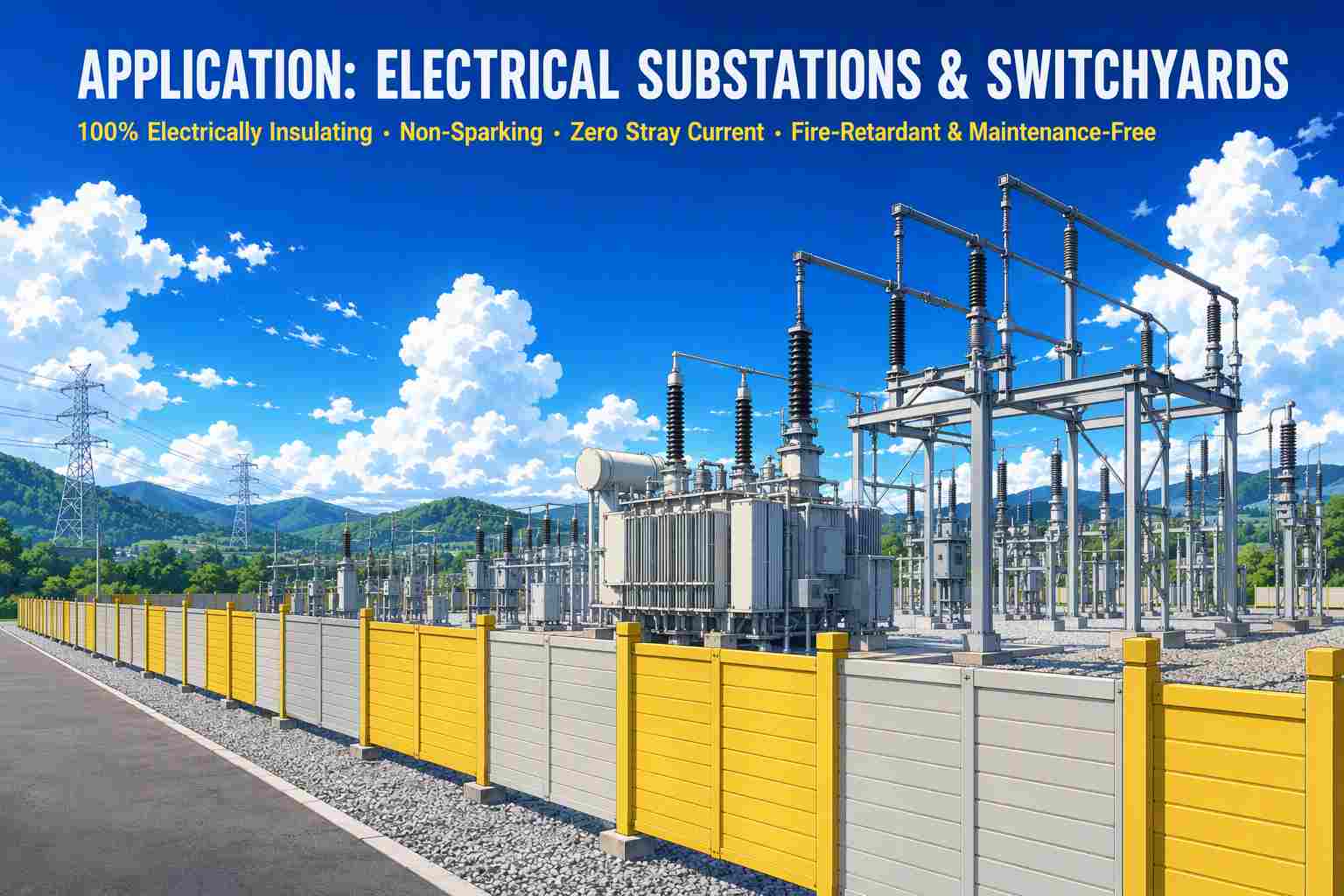
FRP fence is deployed around electrical substations, switchyards, and battery storage sites as a safety perimeter that is electrically insulating and non-sparking. The fence is made from non-conductive fiberglass profiles, often with fire-retardant resin, and is installed on independent posts to avoid creating a grounding path. It solves the serious problem of metal fencing conducting stray current, creating shock risk for personnel, and interfering with protective relaying and grounding design. The practical value is compliance with utility safety specifications, reduced risk during live-line maintenance, and a fence that does not require periodic rust treatment, which lowers long-term maintenance costs and avoids hot-work permits inside energized facilities.
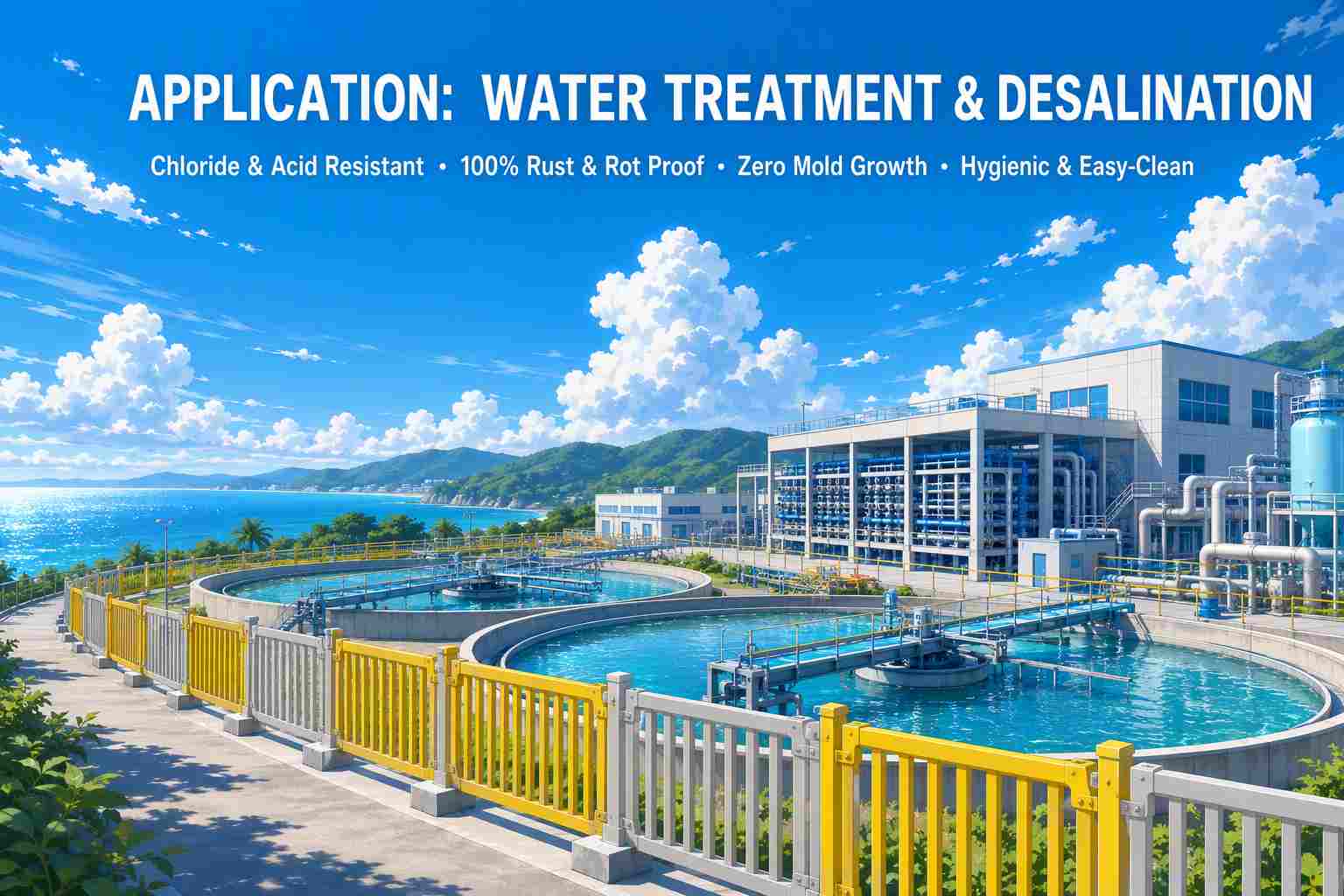
FRP fence is installed around water treatment and desalination plants, including clarifier areas, chemical storage zones, and membrane buildings. The fence resists chlorides, acids, and constant moisture, and it will not corrode, rot, or support mold growth like wood or coated steel. It solves the problem of conventional fencing failing rapidly in aggressive chemical and humid environments, which creates security gaps and repeated replacement costs. The real value for plant operators is a perimeter that maintains security and appearance in harsh conditions, reduces shutdown time for fence repairs, and supports hygiene and safety audits because it is easy to clean and does not harbor bacteria or rust particles.
Parameter Specifications
|
|
||
|
Model |
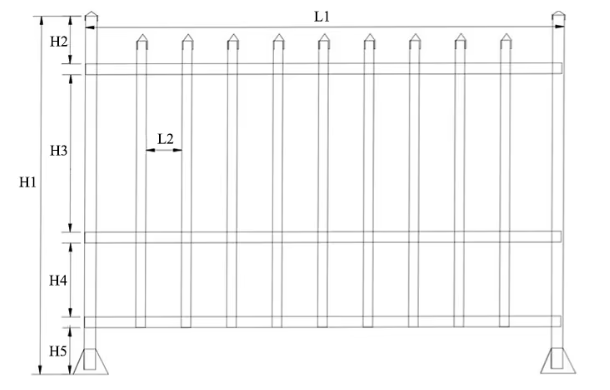
Dimension(mm)H1×H2×H3×H4×H5 |
Dimension(mm)L1×L2 |
|
FT-F |
Customized |
Customized |
منتجات ذات صلة

Fiberglass GRP FRP Fence for Warehouse Perimeters Factory-Direct Manufacturer
Factory-direct FRP fence exporter serving coastal, chemical and solar sites. Corrosion-proof, non-conductive, UV-stable. Custom specs, bulk pricing, fast quotes.

FRP Fence for Solar Farms & Coastal Resorts | China Factory Exporter
China factory exporter of FRP fence for solar farms, coastal resorts, and highway perimeters. Direct supply, custom colors, UV-stable fiberglass. Request a quote.

Fiberglass GFRP FRP Fence for Chemical Plants Coastal Warehouses to made in China
Heavy-duty FRP fence panels resist salt spray, acids, and UV rays. Ideal for perimeter security in wastewater treatment, marinas, and power substations. 25-year service life. Get layout-based quote.

محطات عزل حواجز الحماية القابلة للتوسيع من الألياف الزجاجية GFRP FRP لمناطق أعمال بناء الطرق FT-8
حواجز حماية قابلة للتوسيع من FRP للخدمة الشاقة لمواقع البناء والطرق السريعة والمناطق الصناعية. مقاوم للصدأ، خفيف الوزن وقابل للحمل. 1-5 متر طول قابل للتعديل. المضادة للأشعة فوق البنفسجية، غير موصل. سعر المصنع مباشرة. اطلب عرض أسعار الآن!
اتصل بنا على الفور لمناقشة متطلبات مشروع المنتج الخاص بك
الملاحة
الملاحة
تواصل معنا
هاتف.: +86 189 3266 2725
البريد الإلكتروني: sale@hbfortis.com
إضافة.: رقم 8-1 ، شارع تشنشينغ ، بلدة ماتون ، مقاطعة زاوكيانغ ، مدينة هنغشوي ، مقاطعة خبى
تواصل معنا
تواصل معنا